“Equity – Public vs Private Fundamentals 1” (2022) (video presentation)“Equity – Public vs. Private Fundamentals 1” (2022) (audio only)
[wpavefrsz-resizer]
Transcript & images
Christian Walters 00:13
I’d like to welcome everyone to this edition of Money, Banking, and Trust by Moving Titles in Commerce. I’m your host Christian Walters. Welcome to this August 15 2012 edition and welcome to NTT as new trust technology.
Christian Walters 00:28
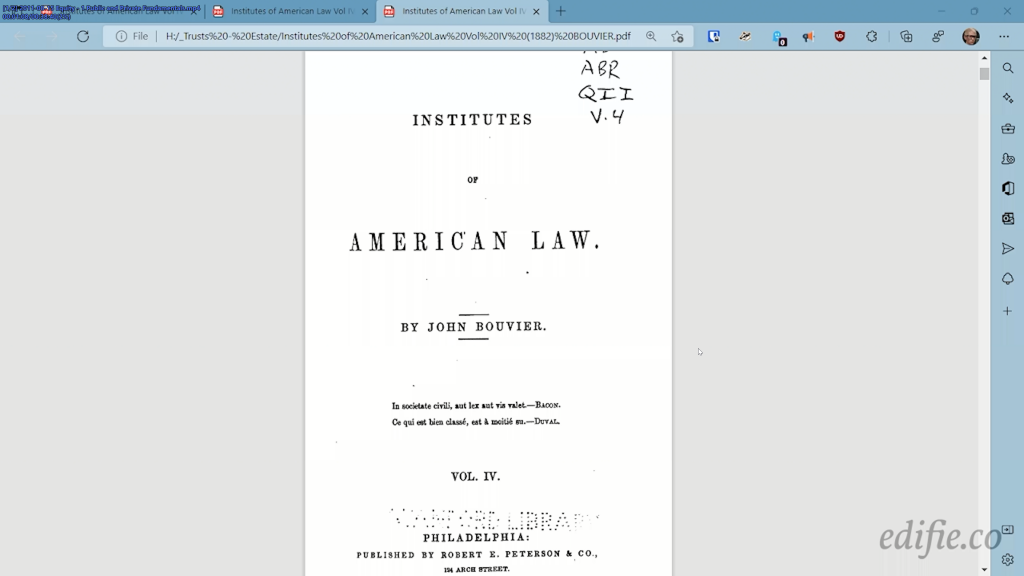
We’ve been going over the Institute of American Law book by Bouvier, John Bouvier.
And we left off on starting a new chapter nine bills an equity and section 4094 4094 origin and nature of bills and equity. And that’s on page four 584 in the book or 594 in a PDF section 4094.
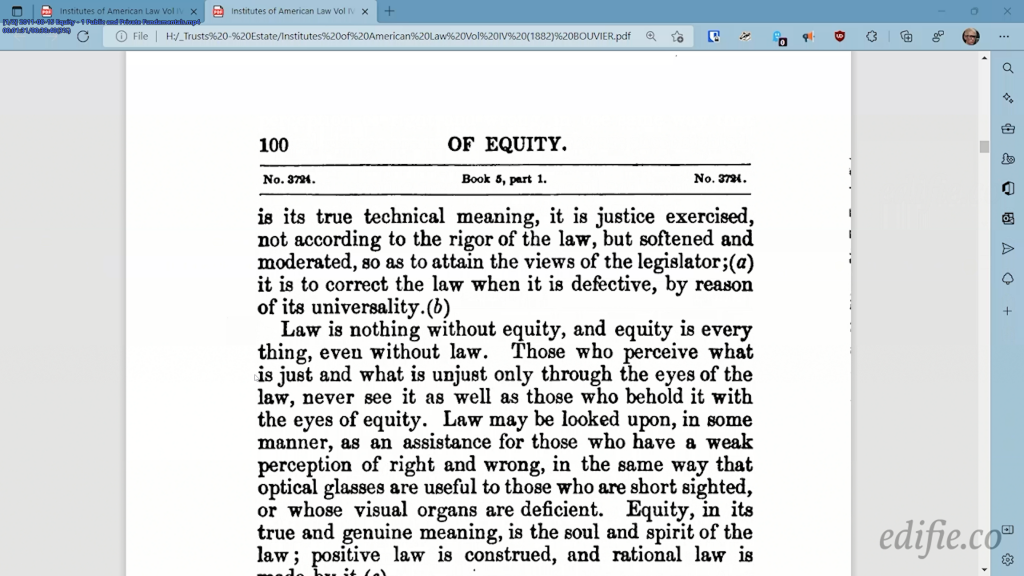
The quote that I really like to quote is what equity is. And this is section 3724, paragraph four worked on states that
Institutes of American Law Vol IV (1888) John Bouvier
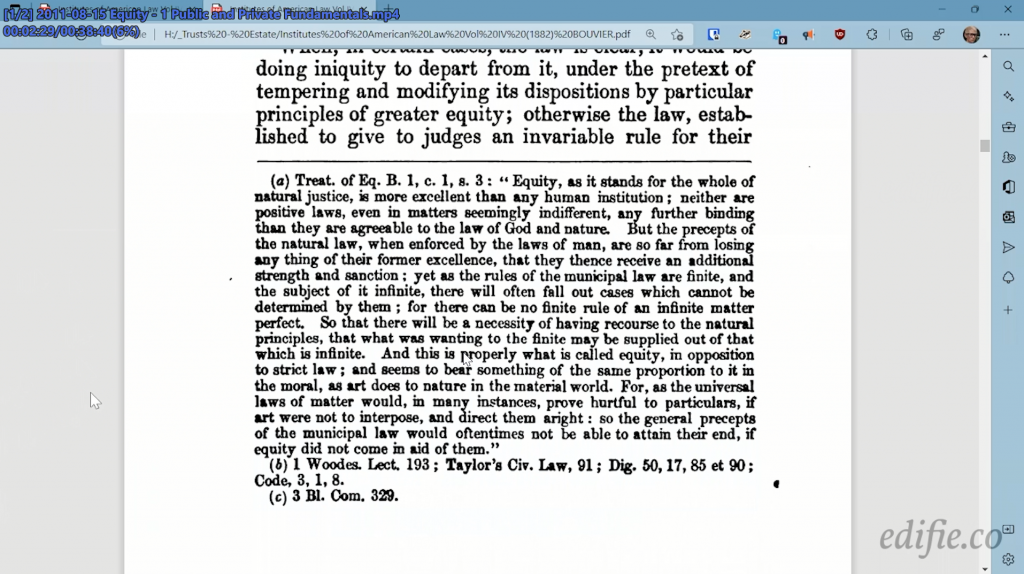
“Law is nothing without equity and equity is everything, even without law. And those who perceive what is justice what is unjust only through the eyes of law never see it as well as those who behold it with the eyes of equity. law may be looked upon in some manners and assistance for those who have a weak perception of right and wrong in the same way that optical glasses are useful for those who are short sighted, or whose visual organs are deficient. Equity is true genuine meaning as the soul and spirit of the law. Positive laws construed and rational law is made by it.” – John Bouvier Institute of American law 1882, Volume Two section 3724 paragraph four.
Now, that man obviously knew what equity was all about!
Christian Walters 02:48
So, in summary, that quote, “The law is nothing without equity.” That being “the law” being the civil, or the statutes and codes, and the common law. Equity is everything even without law. What’s that tell you? That equity is a law unto itself. It’s the creator of the law; it’s the principles upon which the laws are based. So equity doesn’t need law because it is the source of the law (although, equity has nothing to do with law). So, talk about the perception of what is just, and what is unjust: well, that’s your discernment that you gain and have through equity–through equity eyes. You gain that perception.
Christian Walters 03:11
So, “The law may be looked upon some as an assistance for those who have weak perception of right and wrong.” In other words, they’re lacking that discernment because they don’t know and understand what equity is. Equity is the optical glasses correcting your vision of what’s right and wrong. And without it, you’re gonna view the laws totally different[ly]. You’re gonna see the laws as being harsh, overburdened, treasonous, rebellious–everything else that people complain about what they think the system is all composed of. But in their short-sightedness, they need to correct their vision, because they’re totally off-base and wrong. The only thing in the system that needs fix[ing] is you. Your perception of “what’s right and wrong” is totally wacko.
Equity’s true and genuine meaning is the soul and spirit of the law–it’s the source, or the creator of the law. And it comes from the God-conscious mind. Everybody wants what’s fair, right, and just. Well, that’s righteousness! That’s the God-conscious mind. That’s equity.
“Positive law is construed, and rational law is made by it, rational law (or civil law, common law). This is the law that’s written on your heart–not the ten commandments! It’s the knowledge of equity, which you “suppress in your depravity.”
Public vs. Private definition
Now on to public versus private definition. What is public versus private?
Definition of what private is. This should correct everybody’s attitude or mind, thinking that what they’re doing is totally private, with all your redemption methods and your set offs and your discharges and creations of your liens thinking that you are operating in the private and the set off is in the private. That’s all BS folks. There’s nothing private about that–it’s totally 100% public and you don’t have a license to operate that way in the public. They haven’t granted you one. You’re trying to shove what you call a “private method” down their throat. And what you’re doing is a public method in a public forum, and they got total control over you. And you wonder why it doesn’t work.
So, “How do I get into the private?” Let’s define what private really is. So you got your ears on? “Private” is any relation that you imply or express which is your intent is a special one. The next question is when did you ever express your intent to form any relation as a special one? And the answer to that is “never” because you’d never did anything special. So all your relations then are all public. Even the ones that you think are private because nothing was done specifically to create a special relation. You’d have to step outside the box do something special to create a private realm. Nobody does that. When did you do something specially to set up your set-off for your lien as a discharge (or whatever you want to call it)? Never.
There’s only one way to set up something special. That’s through a private trust. It is not contract. Contract is at-law. At-law is D-C, debtor-creditor. Trust inherently reside in its own exclusive head in equity. That’s the only place that’s private–equity. That’s the only place where you have your substantive rights. And that’s the only place your substantive rights are upheld, or enforced. That is the redress for your grievance, but you don’t know it exists.
Today, it’s like the merged rules of the system. Like looking at a five gallon bucket, you got at-law poured in there. And you got equity poured in here. But all you see is the outside bucket. And you think that bucket contains both of them all mixed up. You look at the outside of the bucket, you see one bucket containing equity merged with at-law? No, it’s not. If you’d look inside the bucket, you’d see those slot down the middle. Equities poured on the right side, and at-law’s poured in on the left side, and the two are totally segregated and never commingle. They’re still two separate jurisdictions. Though laws looked like they’ve been merged, but they really haven’t.
Equity Jurisdiction Location
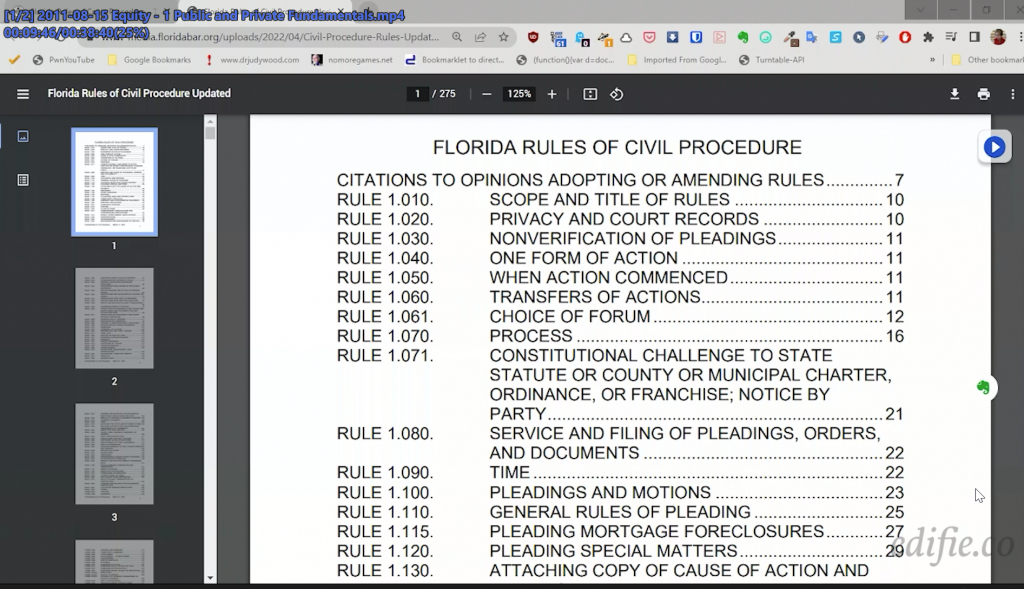
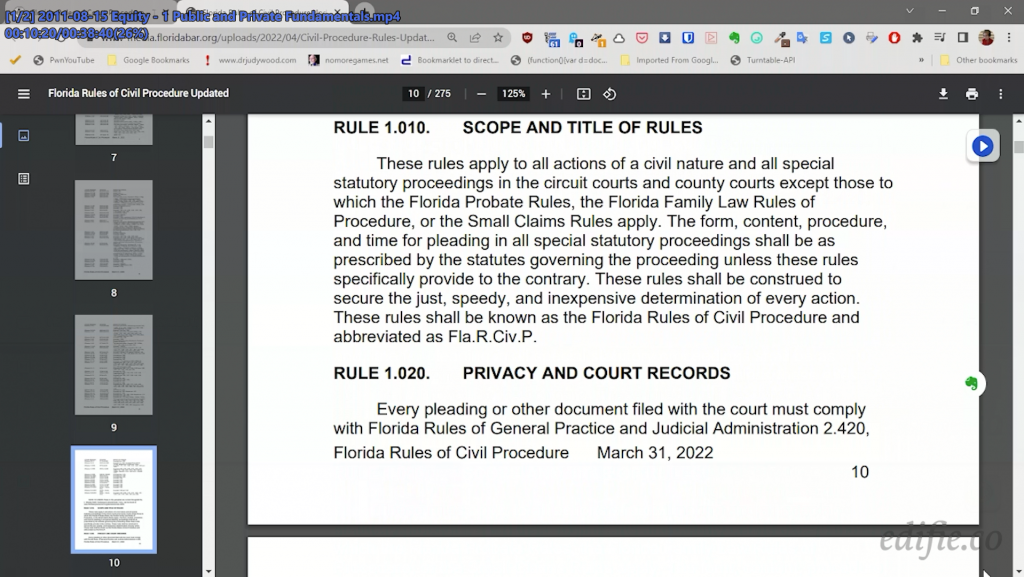
Florida Rules of Court or Florida Rules of Civil Procedure. You can turn to any one of your state’s looking your judicial rules of your court. And I’ll bet you, I’ll bet you you could turn to the very first rule, and in every state is gonna read the same thing similarly. This is rule 1.010 [in Florida]. The very first rule is entitled the scope and title as the rules. The very first one. It says “these rules apply to all actions of civil nature and all special statutory proceedings.” Special! “The actual proceedings “in in the circuit courts and the county courts, except those which Florida probate rolls,” then blah, blah, blah or skip some stuff…
Christian Walters 13:17
Next sense, the form, content, procedure, and time for pleading in all special statutory proceedings shall be prescribed by the statutes governing the proceeding unless Unless these rules specifically provide to the contrary. Now, pay attention to this next one. “These rules shall be construed to secure the just speedy and inexpensive determination of every action.”
These rules shall be construed to secure the speedy, just speedy and inexpensive determination of every action. Now under the author’s comments 1967. explaining this rule does this role 1.101 is almost identical to former rule A and now abolishes this distinction between law and equity. While it’s just this distinction between law and equity
Next paragraph. Talking about criminal procedures were adopted by the Supreme Court of March 67, effective June 1 1968. “By being applicable to all suits of civil nature, the circuit rules covered not only law and equity giving some..” “…but also special statutory proceedings and proceedings under the various extraordinary risks up to additional paragraphs Those are rules completely abolish the distinction between law and equity, as does federal rule two, which provides that there shall be one form of action to be known as civil action.” See rule 1.040 “The direction for that the rules, quote, shall be construed to secure the just speedy and inexpensive determination of every action.” … “has two courses.”
Bingo. Bingo, bingo!
It looks like the bucket on the outside with these merged roles, but inside, there are two courses–two courses–one segregated from the other one at law and the other in equity.
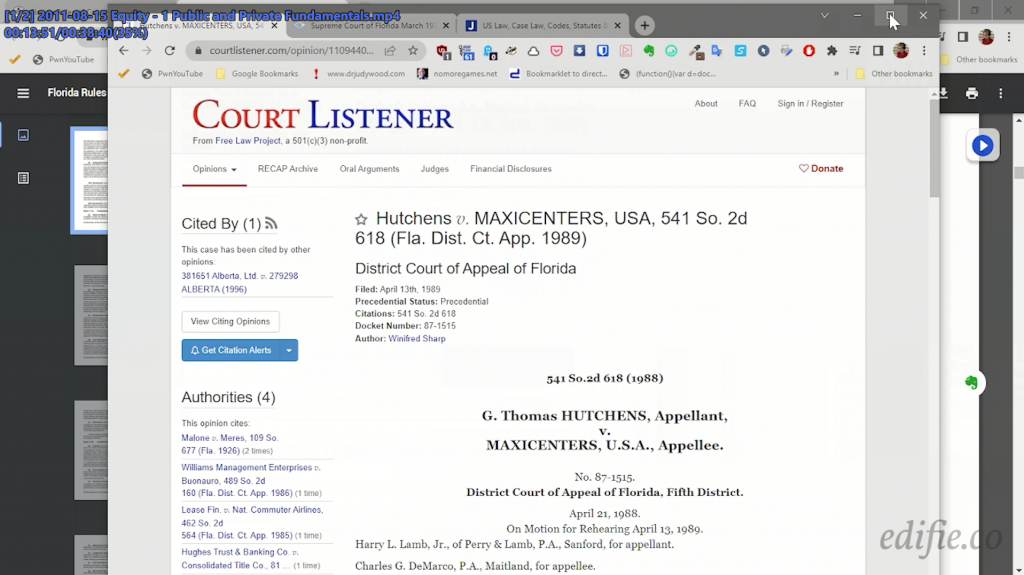
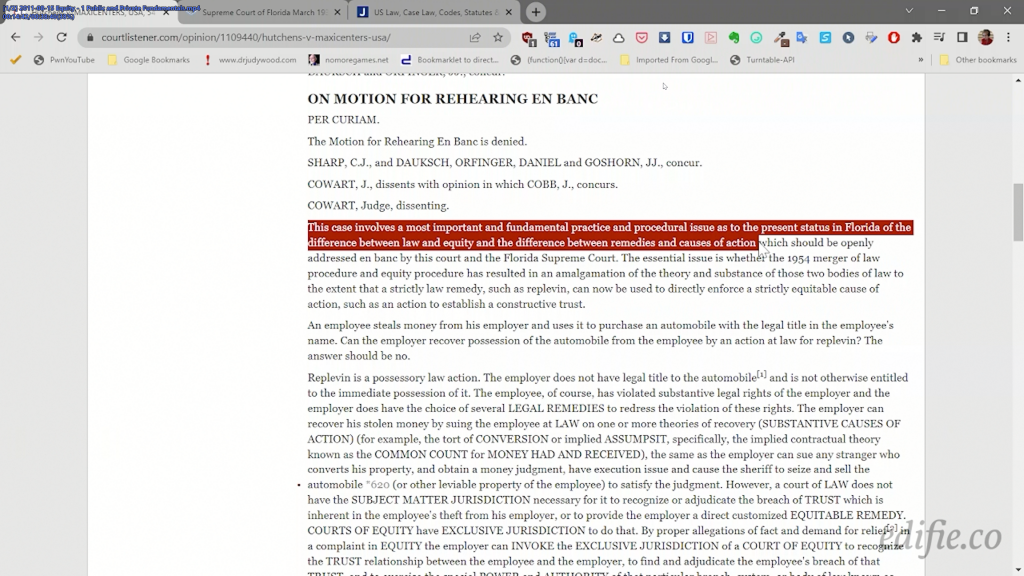
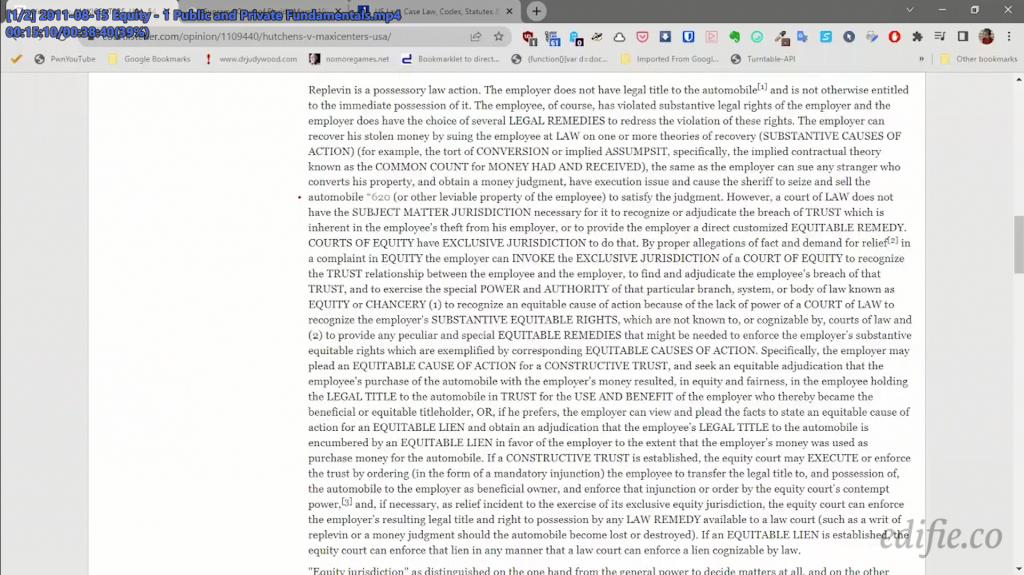
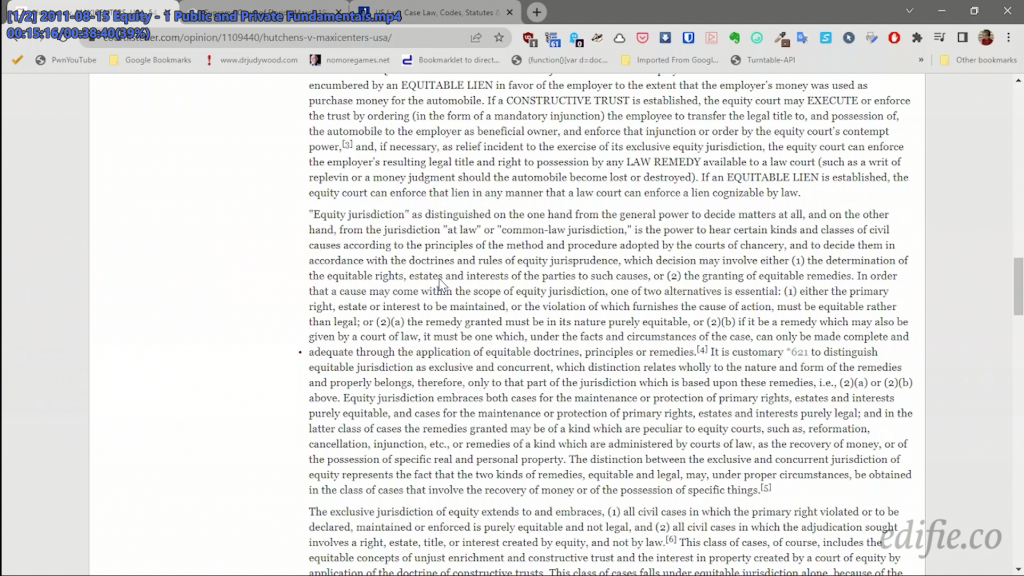
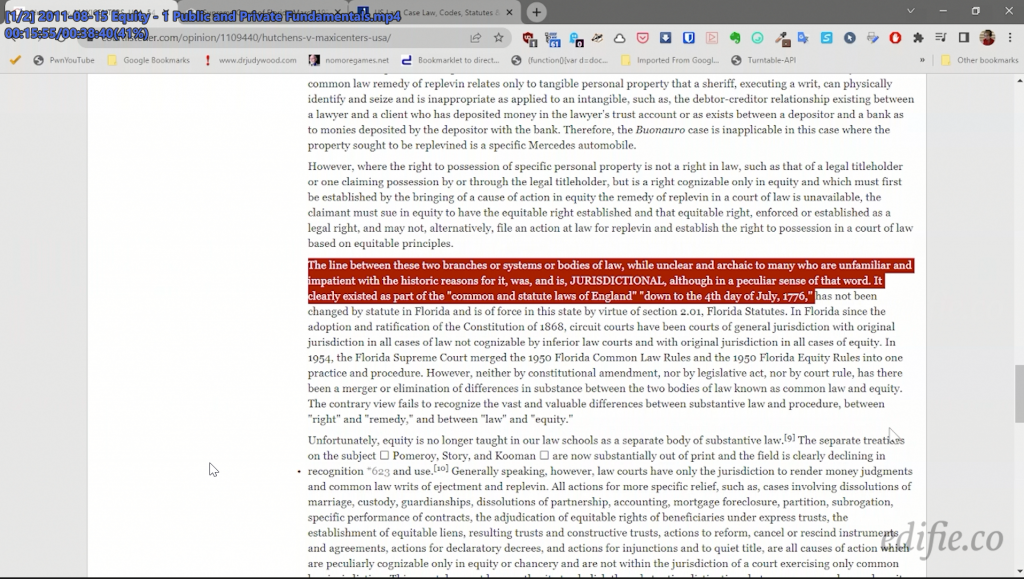
So they’ve abolished the distinction that looks like they’re separate. Because they look like they’re merged on the outside. But on the inside, there’s been no change. There’s still two courses. Still, two jurisdictions. Go read the Hutchens v. MAXICENTERS, USA, 541 So. 2d 618 (Fla. Dist. Ct. App. 1989) Supreme Court or no district court of appeals decision fairly recent, 1996.
Now explain what these two courses are. What is this, “just. speedy, and inexpensive determination of every action,” now? “It is first a direction that if the rule needs interpretation,”–and it does–“the stated objective is the guide–” the guide.
The direction recognizes that procedural law (or in other words, at-law) is not an end in itself. So the at-law is not the end. It’s just the beginning. But nobody takes it to the end. It is only the means to the end. And that end is the proper administration of the substantive law, or the “law of substance.” That’s equity, folks!
The procedural law or the at-law is supposed to take you to the administration of the real which is the substantive or equity. But nobody brings it forward. Procedural law fulfills its purpose if–if–the substantive law is thereby administered. When did you ever get it administered? Never. Because you never asked for it. You thought the rules were merged. And the only source was to take it in the procedure form up to where you should have switched it to the equity and taken up phone for the wind. And you never did. Procedural Law fulfills its purpose if the administrative law is thereby administered in a just speedy and inexpensive manner. You never did.
That’s in the first rule. The very first rule. You’d never see that unless you’d studied equity and read the rule with equity eyes on. You don’t know how many times I’ve read that glossed over that because I never knew what equity was all about and couldn’t see it. could recognize it. There it is staring you in the face. You can’t say that they didn’t tell you. Because it’s written everywhere, you never see it, you gloss over it. The very first rule or not first rule, the very first chapter that has anything other than the definitions in the statutes and codes of Florida and probably the same in every other state. Chapter one talks about definitions. So there’s really no substance there. Other than giving a defining words, the real stuff starts in chapter two. And the very first one and chapter two 2.01. States that you have equity available to you. It doesn’t say equity per se at all. But it says that you have what England had at 1776.
And what did England have at 1776? Equity. It says that is in full force and effect in America today.
The very first one, they give you public notice that they recognize you have equity. The very first rule in their jurisdiction of the court system says we recognize you have equity. Can’t take it away from you–just like the Declaration of Independence says–you’ve got unalienable rights that cannot be taken away from you, you just have been put to sleep, never knowing that you even had them in the beginning. Everybody knows they want something that’s fair, just, and right, but they just don’t know what it is. They don’t know what their rights are. And they don’t know how to enforce it.
But there really [are] two separate jurisdictions and always will be. Yeah, taking your substantive rights away from you, you are you never claim them. You waive them. You come in with an at-law case, due to the signing of your contract, which is all debtor-creditor. If you don’t like being in court on the at-law side, don’t do debtor-creditor!
Or you better know how to invoke the other side, which is really it’s an executory contract–two of them–and executory contracts are really two trusts. They’re not contracts–contracts and torts are at-law. These are not contracts, these executory contracts executory contracts are in equity, they are two trusts.
You failed to bring the consideration for the first trust, which is your so called D-C contract that they’re using to foreclose on you. The consideration for that [first trust] is the second one in equity. Merge the two together, you got zero. You have termination of whatever they’re asking for.
It’s better have the purpose of the second trust not being, say, for the receiving of the house. No, it better be for the extinguishment of the debt. It was just for the house, you got the house and that one’s executed and that trust is terminated. If there was another purpose, then the trust isn’t terminated and that purpose needs to be the extinguishment of the debt. If that one’s for the extinguishment of debt, when you merge that with the first, they’re terminated.
If the defendant who is being forfeited and foreclosed on with penalties, what is being extracted from him is going to the plaintiff on the so-called D-C side, on a contract, secured by a mortgage. That defendant is also the beneficiary on the other side. On the other side of the beneficiary, he’s the sole owner of the trust.
Whatever is taken from the so-called defendant that the plaintiff gets, the plaintiff is the trustee on the second trust. And that trustee owes a duty to the beneficiary. Because it’s cestui que, the cestui que, or the beneficiary is the owner of the trust. He gets all the assets. He’s the one who has the right to take from the trustee. And if the trustee is the plaintiff on the other side, then what he’s extracting from the defendant goes right back through the trustee, back to the beneficiary, and he gets the very thing that’s being extracted from him. The whole point is moot. It’s a wash, the one cancels the other out. If you don’t understand that, you’re stuck in la-la land.
Equity abhors forfeitures and penalties. What’s the at-law side doing all the time? Extracting forfeitures and penalties. Equity abhors forfeitures and penalties. Equity ignores fictions. It’s the only place that the real substance can be seen as the real man and woman.
It’s all about rights. I got the right to the ownership of the thing. has no value of say $50,000 Its value is “it’s mine” [ownership of the equitable interest -EMK].
Of Bills in Equity & the Significance of Maxims
Institutes of American Law Vol. IV (1888) John Bouiver
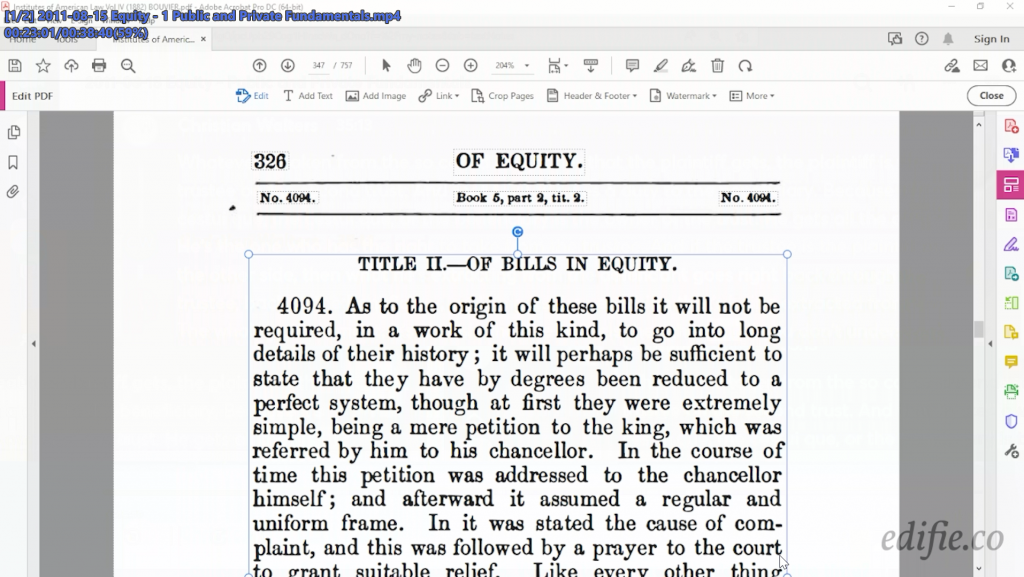
Now John Bouvier’s book 4094 A couple pages done. Page 584 In the book or 594 in the PDF section 4094. “As to the origin of these bills it will not be required, in a work of this kind, to go into a long details of their history if you want history. Go to Spence, read Spence’s book. It explains the history of equity really great. Pomeroy says, “I don’t need to talk about history, Spence did a great job on that. I’m going to talk about something else.” So Bouvier:
“As to the origin of these bills it will not be required , in a work of this kind , to go into long details of their history ; it will perhaps be sufficient to state that they have by degrees been reduced to a perfect system , though at first they were extremely simple , being a mere petition to the king, which was referred by him to his chancellor. In the course of time this petition was addressed to the chancellor himself ; and afterward it assumed a regular and uniform frame. In it was stated the cause of complaint, and this was followed by a prayer to the court to grant suitable relief.”
Christian Walters 23:55
Okay, one word about prayer: I’m not afraid to ask for prayer at the end, because I’m not praying to the court, I’m praying to the God-conscious mind. The king at that time when this was all put down in writing was to represent the consciousness of God in heaven. He was supposed to represent what was fair, just, and right. So I’m not praying to a man, I’m not praying to a court system, I’m praying to the God-conscious mind.
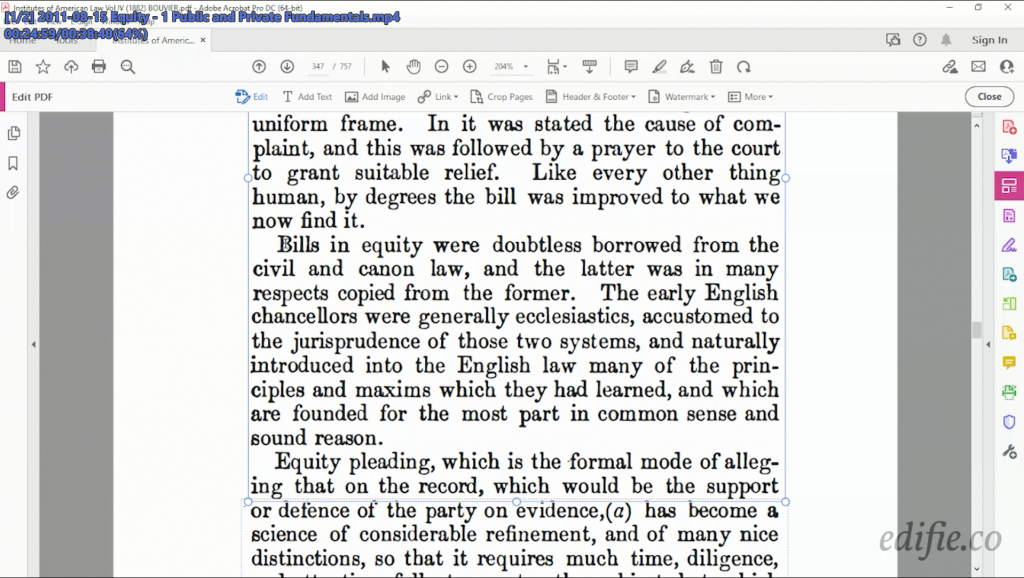
So “this was followed by a prayer to the court to grant suitable relief. Like every other thing human , by degrees the bill was improved to what we now find it. Bills in equity were doubtless borrowed from the civil and canon law, and the latter was in many respects copied from the former. “
Now I want to go back to that and say, okay, it didn’t come, it may have copied some things from it. But where did it all come from? What was the source? It goes right back to the source, which is the God-conscious mind again, God has always known about equity. Always has known. Equity is his nature. Man came along and finally recognized what it was. Maybe the Romans recognized it, or maybe it’s in civil and maybe in canon law, ecclesiastics, or whatever, but they’re not the first source of it. They’re just the recognition of what God knew all along. It’s been there since time began. It’s nothing new. It’s new to us because we never knew about it. So it’s analogous to the civil, canon law, ecclesiastics, or the Roman Civil Law but it’s not because its source is really from the Creator: God himself.
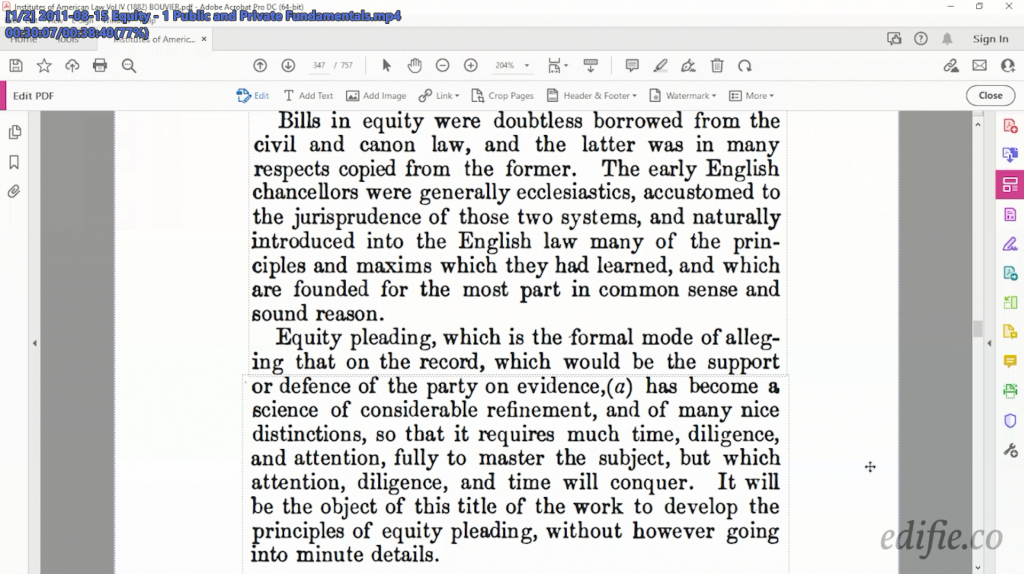
“Bills in Equity were doubtless borrowed from the civil and canon law, and the latter was in many respects copied from the former. The early English chancellors were generally ecclesiastics, accustomed to the jurisprudence of those two systems, and naturally introduced into the English law many of the principles and maxims which they had learned, and which are founded for the most part in common sense and sound reason.”
Now, where’d they get that from? They got that from studying the Bible. Because the Bible is full, it’s replete of examples of equity in there, if you had the eyes to see it. One of the prime examples is the adulterous woman. If you’ve got legal spectacles on, you’ll say, “Okay, that happened was he released her because there were no showing of the witnesses. And it couldn’t proceed with the case and therefore, okay, there was no case so that she had had to be released.” No, she knew, being God, of her sin, that he talked to her about. Him being a perfect God, he should have stoned her right then and there. But he didn’t–why not? Because he wasn’t operating by law, because the letter of the law kills you. He was applying grace, which is the flip-side coin. On the other side is equity. Grace proceeds out of equity. And equity is the God-conscious will. It is the mind of God. He wants to administer everything fair, just and right. And Solomon would be a prime example of that.
It’s not just the ecclesiastics, they read it from their Bibles. They took the examples of the adulterous woman and many others because they could see the equity in the Bible, not the law. There’s not a preacher on the face of the earth today that is preaching equity from the Bible. They’re all preaching at-law. They’re giving you the interpretation of the Bible from the at-law perspective. None of them can see from the other side, which is equity because As they give you the at-law interpretation of the adulterous woman and not the equitable one.
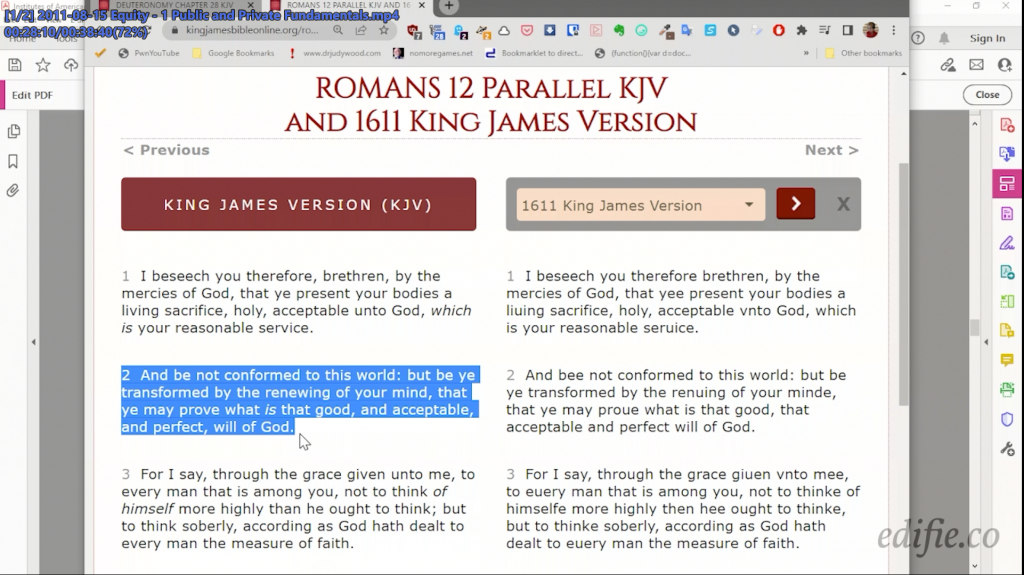
You need a different perspective. Romans 12:2 says you need a paradigm shift.
You need to shift your mind from at law to equity.
Christian Walters 28:10
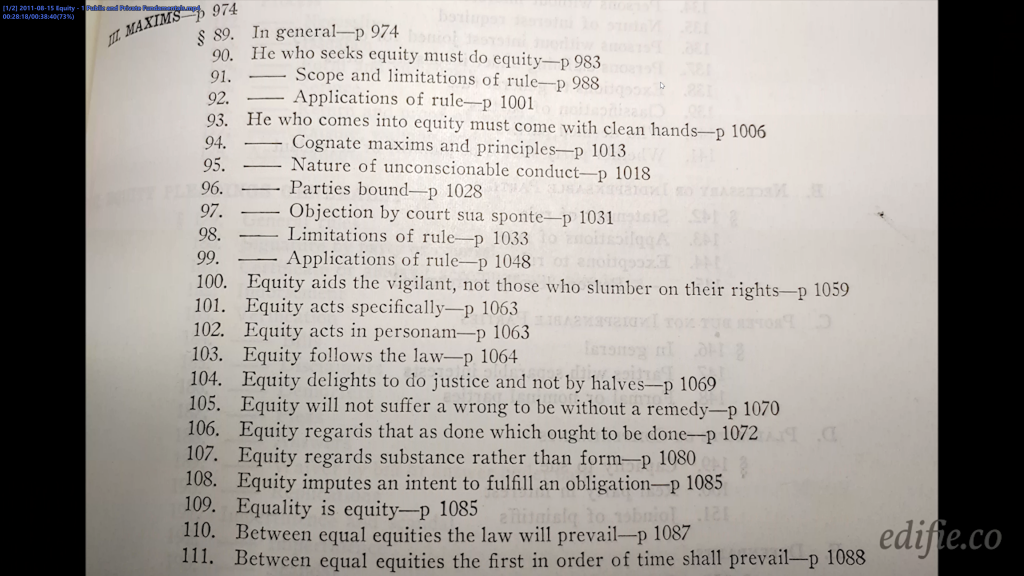
Now to understand the will of God–the conscious mind of God–we’ve come up with these so-called “pithy statements:” they’re called the Principia. What they are is a brief summary of what the equitable example was–to say, the adulterous woman–and they’ve come up with a what they call maxims to help you understand what is really all about equity. What is fair, what is right, what is just. And this whole system of equity jurisprudence, its principle that it operates on are the maxims. Like a train track, the train runs freely anywhere it wants to on the track. But yet the track is restricted to the train-tracks, the train must run on the track. Judges don’t have total discretion, inequity. Their discretion is like the train track, limiting them only to the maxims.
But if your judge is acting as a chancellor in equity, if he’s on the track, he will operate as to the maxims. And of the thousands of cases that Nightrain has been posting in the chat room that proves that these courts are operating equitably. Because all those cases contain maxims and their decisions. You have equity available to you today, you just don’t know how to invoke it. You’re in the wrong court. You’ve been in the wrong court. You never knew that there was another court to be in. So:
“the English law many of the principles and maxims which they had learned, and which are founded for the most part in common sense and sound reason. “
“Equity pleading, which is the formal mode of alleging that on the record, which would be the support or defense of the party on evidence,(a) has become a science of considerable refinement, and of many nice distinctions, so that it requires much time, diligence, and attention, fully to master the subject.” Although, Pomeroy states, he says in the preface to his book on equity, his series, six volume set, he says that some of these principles, in other words:
“Equity maxims are so comprehensive and fruitful that one who has grasped them in their fullness of conception–” just the concept, in other words, “–has already mastered the system of equity. All else is a mere application of these grand truths to particular circumstances.”
“Equity maxims are so comprehensive and fruitful that one who has grasped them in their fullness of conception has already mastered the system of equity. All else is a mere application of these grand truths to particular circumstances.”
John Norton Pomeroy
Thirteen maxims versus 63 million statutes and codes. I don’t think I have to make a comment on that. You choose which ones you want. There’s no way possible I can know 63 million statutes and codes. And, really, I don’t have to. Those statutes and codes are the letter of the law. The Bible tells me the letter of the law kills. Those statutes and codes–those laws–are put in place as a tutor leading you back to equity. It’s a two-by-four that hit you in the head that says, “Wake up, get out of this realm!”
There is a pathway out of it. You just have to open your eyes. Put on the spectacles to correct your nearsighted vision, the spectacles of equity and you won’t be living under law. You don’t need to live under a law. In fact a real man shouldn’t be living under law. He’s not subject to the law unless he breaks–unless he’s not doing equity. If you’re not living equitably, you’re subject to the statutes and codes. You live in equity, you’re not under the law, you’re under grace.
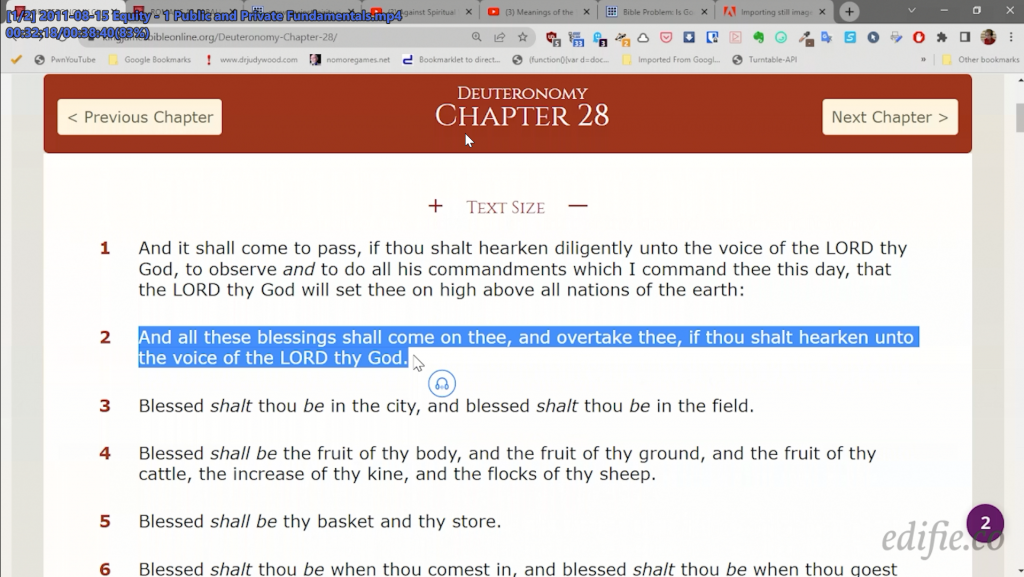
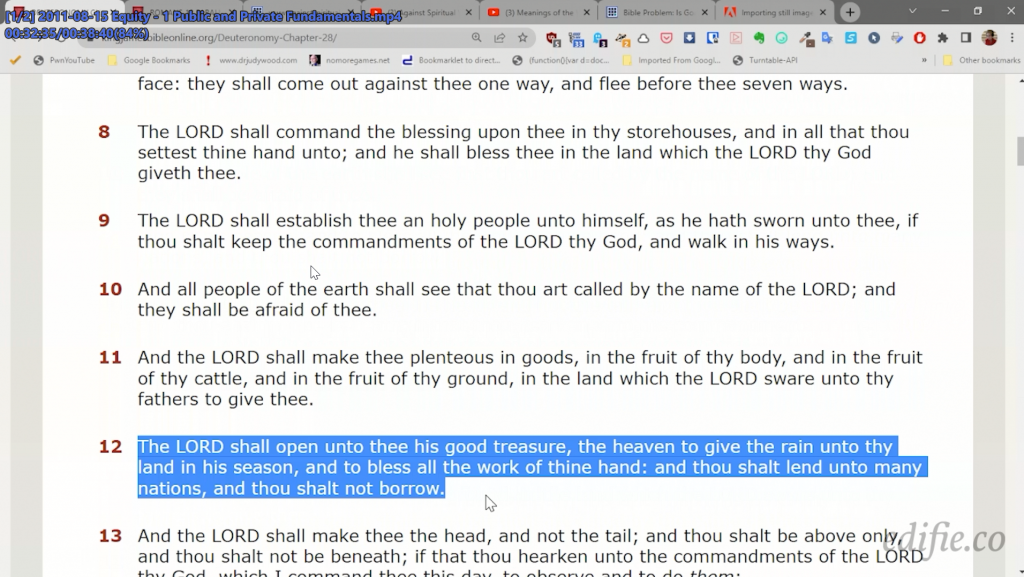
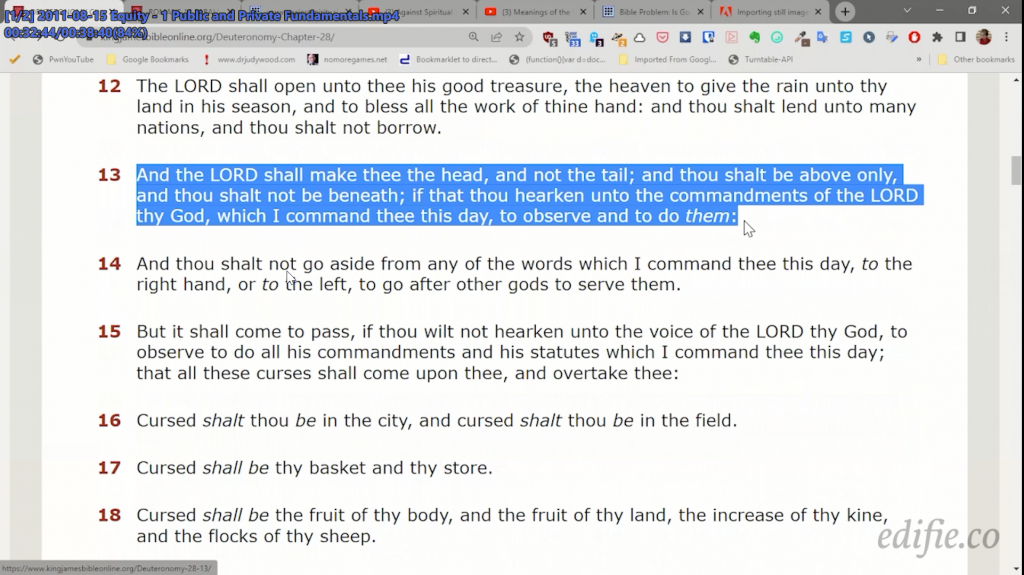
What is the letter of the law? All commercial. All the statutes and codes are put in place to speed up commerce. Commerce is the worship of Federal Reserve Notes, and credit–which is public sourced–which is a sin. It’s worshipping false idols. If you’re Christian, read Deuteronomy 28, especially verse 20. It says, “God will give you a mind of confusion so that you can’t understand anything.”
The LORD shall send upon thee cursing, vexation, and rebuke, in all that thou settest thine hand unto for to do, until thou be destroyed, and until thou perish quickly; because of the wickedness of thy doings, whereby thou hast forsaken me.
[Deuteronomy 8:20]
In other words, you’ll never know that you’re the tail instead of the head–you’ll never know that you’re cursed. You’ll never know that you live in a backwards realm. But you need a Romans 12:2 fix. You need a paradigm shift, you need to put the eyes of equity on, you need those spectacles on. So you can look at the law and see the law differently. The law works in conjunction with equity, the laws were made from equity. But the law was to show you that you’re breaking equity. Because you violated some statute and code. Now I’m not saying that all statutes and codes are righteous. Because if we’re setting up statutes and codes to promote commerce, then we’re worshipping false idols. And God has given us a mind of confusion so that we can’t understand it here and see.
Christian Walters 52:21
Since we’re supposed to be entering in the age of great enlightenment now–spiritual awakening, that spiritual awakening is probably coming to the fact that we are worshipping false idols–the God of commerce–and because of that, in Deuteronomy, what it says, we are totally cursed. If you want to get out of the curse, get out of commerce. You’re gonna say, “Oh, I gotta eat.” That’s like saying heroin is good for yru. Because commerce is a drug. You think you need it.
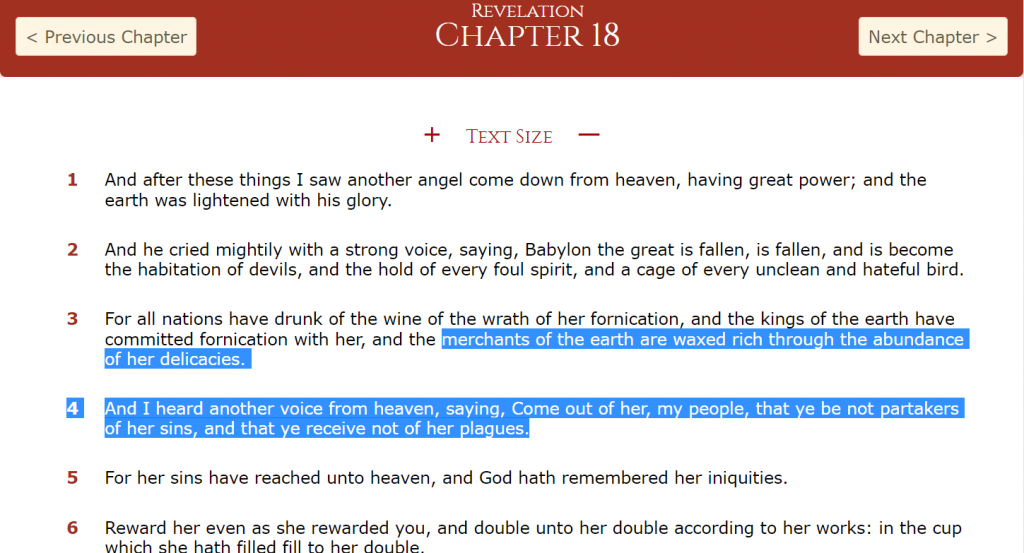
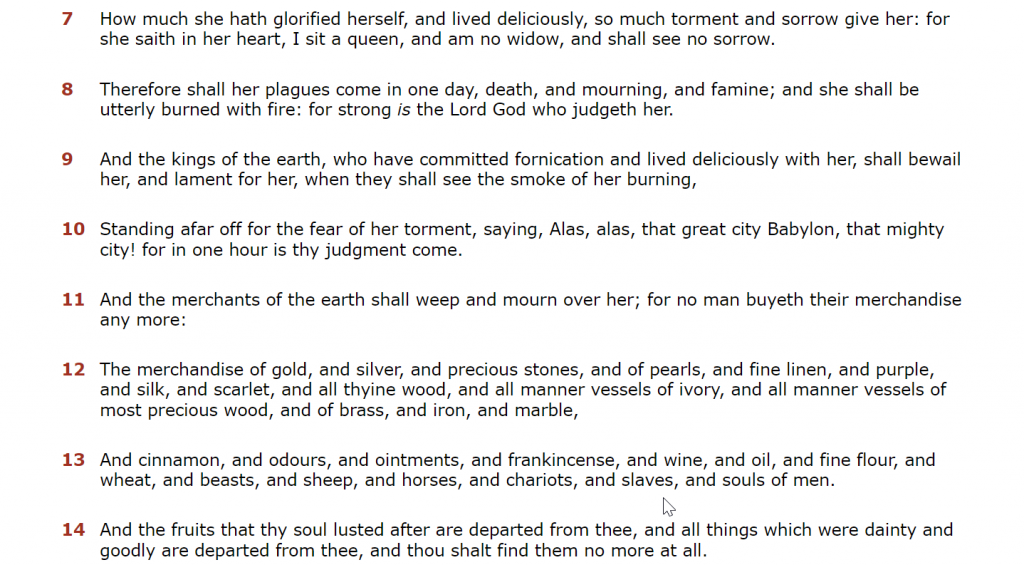
But your perception of reality is all skewed. You’re hooked. You’re on a drug. Get out of it. Because you’re commanded to get out of her. Revelation 18. Get out of her before Babylon falls–and Babylon is commerce. Babylon is not the United States. Babylon is the commercial realm of the world.
Christian Walters 54:00
Read Revelation 18. Look at all the things that one our going to be destroyed. All the fine linen, the fragrances the all the gold and the silver, this precious stones and the pearls and the fine linen the purple, the silk, the scarlet of every kind of Citron wool when every article of ivory and every article made from the very costly would have bronze and iron and marble, the cinnamon, the spice, the incense, the perfume, the frankincense, the wine, the olive oil and the fine flour in the wheat and the cattle and the sheep and the cargoes of horses in the chariot and the slaves and the human lives. All those things are commercial, commercial transactions. It’s the commercial transactions of those things. That is Babylon. Come out of her. That chapter commands you to come out of her. You’re worshipping a false idol, and you’re cursed because of it.
Christian Walters 55:25
Wonder why you can’t understand NTT? You wonder why you can’t understand equity? Because you’re worshiping commerce. Until you stop worshiping commerce and God takes your mind of confusion away, you never will see it.
Christian Walters 55:48
You just pray to him to ask him to remove your mind of confusion and show you the path out of commerce. Before it’s too late, before Babylon falls. I don’t care whether Babylon falls, it ain’t gonna affect me one bit. If you’re living in operate in equity in the private, I don’t care what they do in the public, they can incinerate that place.
Christian Walters 58:04
Do your own research, your own due diligence. You have not been given a special education, you’ve been given a general education. It’s not up to them to teach you specially, it’s up to yourself to do that. You want a special education, you want to know how to live in the private? There are books about it written all over the place. In fact, the court system in itself, the authorities that it says that it uses, are like Pomeroy, Story. And if you read Pomeroy, Story, and other books like that, that they say are the authorities. They fully explain to you all about equity. And you have no right to tell anybody that they never told us. They did. You never read it. Just like myself. I’m just as guilty as you are. But I’m telling you what I see today. And I see 100% differently than I did, say, when I first got into all this, because I was just like you, want to say, “They’re all treasonous. The system’s all corrupt,” blah, blah, blah, “hang them,” everything else. And no, that’s not the way I look at it now. I am the first cause of the problem today. I’ll be the first to admit that. But since then, I’ve had a paradigm shift and I’m trying to explain to everybody else what I see and get them to see what I see.
Christian Walters 59:53
If you stay in this study long enough, there will come a time will you will know and understand. And you will say, I can’t go on with this commercial realm any longer. I’ve got to chuck it, I’ve got to jettison the D-C realm, and I won’t touch it again. But to get to that point, you have to reach a certain amount of hours of study and get the understanding that you know that you have substantive rights, what those substantive rights are, you know that you’re the 900 pound gorilla and then you know how to enforce your rights. And you live by equity, and the first maxim of equity is “He who enters into equity must be doing equity.”
Christian Walters 1:00:50
In other words, I must concede and admit that the other party has rights, also. And I must honor those rights that they have. Because we’re all living equitably together. It’s not one sided, be as gentle as a dove, but as wise as a snake.
###
Take notice and acknowledgement with agreement that the show and documents is private not to be construed relied upon as being legal advice for an individual legal situation or employee from making a legal decision. You will not use any of this information for making a legal decision or performing a legal procedure is not a substitute for legal advice and or guidance by a licensed attorney. This private show and or documents are for academic and informational purposes only to be used at your own risk without liability to Christian Walters by accessing reviewing this show or using the documents there and you understand what the agreement that was all rights reserved without prejudice. Christian Walters is not an attorney licensed to practice law in the state of Florida or any other state and has not given legal advice or accepted fees for legal advice provided no assistance advising or guidance of any kind for use by non attorneys or pro se parties in the preparation or use of hearing referenced and has no interest in any use reference there in in there’s not a party to this or any action arising from and is only acting as authorized capacity as liaisons communications between the parties are reading out are using this information you acknowledge and agree that you are not a client of Christian Walters. These documents are show recordings are incomplete and void without this notice agreement being attached here and by reference and a breach of this agreement. Upon breach of this agreement, the breaching party becomes liable for arbitrary Admiralty commercial damages of $200 million or more personal notification or impairment for Christian and Walters discretion. Thank you for your understanding
Trust Notice
Take NOTICE and ACKNOWLEDGEMENT with agreement that this show and/or documents is PRIVATE, and not to be construed or relied upon as being legal advice for any individual legal situation or employed for making legal decisions, and you will not use any of this information for making a legal decision or performing a legal procedure, and is not a substitute for legal advice and/or guidance by a licensed attorney. This private show and/or documents are for academic, informational purposes only to be used at your own risk, without liability to Edifie.co or its sub-trusts (“the Trust”). By accessing or reviewing this show, or using the documents therein, you understand with agreement that, with all rights reserved, without prejudice, The Trust is not an attorney licensed to practice law in the State of Florida, or any other State, and has not given legal advice, or accepted fees for legal advice, provided no assistance, advising, or guidance of any kind, for use by non-attorneys or pro se parties in the preparation or use of the therein reference, and has no interest in any issue referenced to it therein, and is not a party to this, or any action arising from, and is only acting as an authorized capacity as liaisons to communications between the parties. By reading and/or using this information you acquire knowledge, and agree that you are not a client of The Trust. These documents and show recordings are incomplete and void without this NOTICE AGREEMENT being attached herein by reference, and a breach of this agreement. Upon breach of this agreement, the breaching party becomes liable for ADMIRALTY COMMERCIAL DAMAGES of $100 million dollars per stultification or impairment per The Trust’s discretion. Thank you for your understanding.